Novum
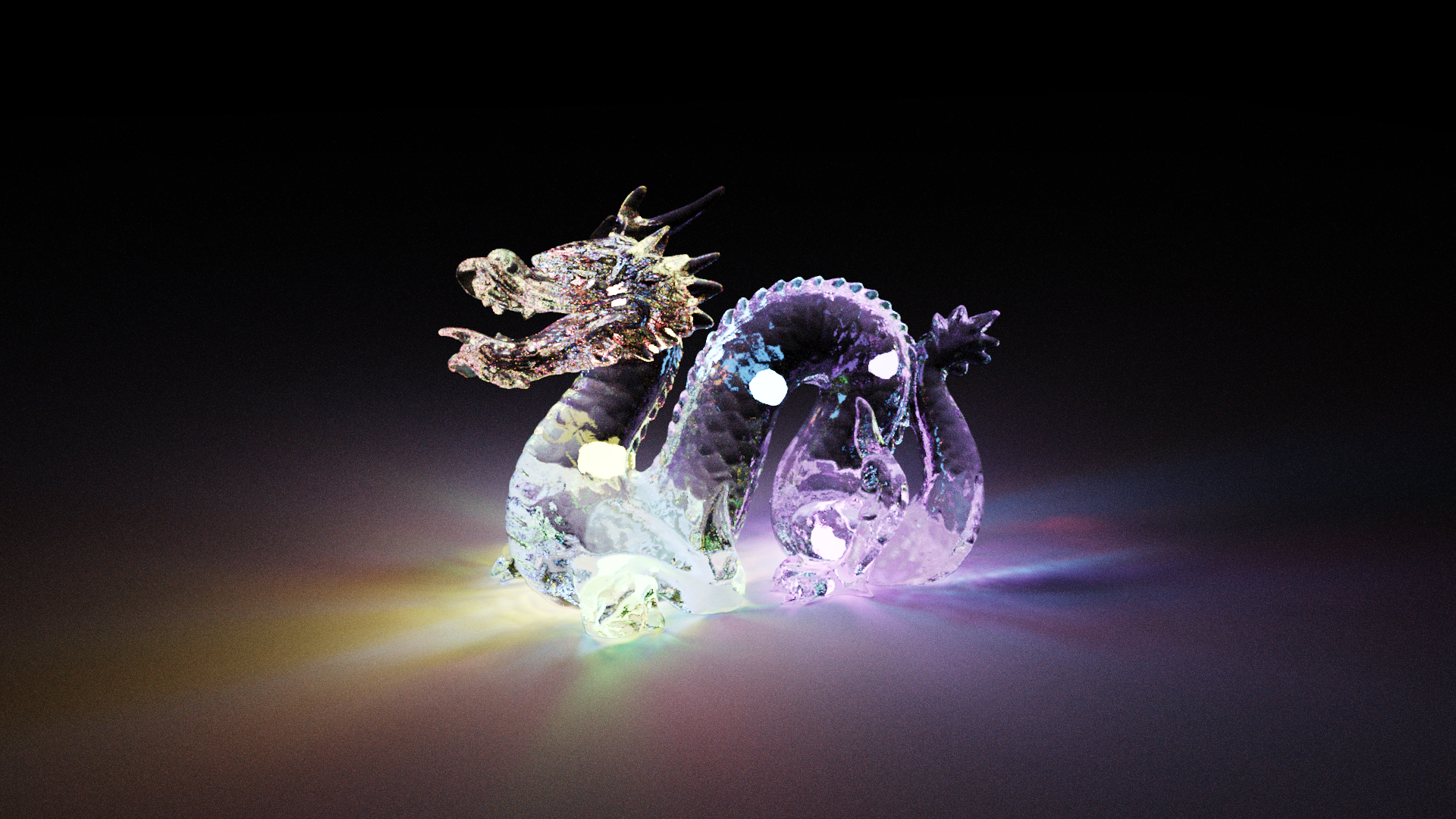 Specular Dielectric Stanford Dragon rendered using VCM. Notice the caustics, which would be impossible to render using Unidirectional PT.
Novum (development: October 2025 – present) is a research-oriented GPU rendering engine written in 100% CUDA C++, built to demonstrate the capabilities of modern global illumination algorithms on a GPU-accelerated platform. It currently supports Vertex Connection and Merging (VCM) (Georgiev et al. 2012), Stochastic Progressive Photon Mapping (SPPM) (Hachisuka and Jensen 2009), Bidirectional Path Tracing (BDPT/BPT) (Veach and Guibas 1994), Unidirectional Path Tracing with Next Event Estimation, and Naive Path Tracing. These integrators — especially VCM and SPPM — allow for robust, efficient resolution of Specular-Diffuse-Specular paths: directly viewed caustics, and caustics seen through multiple dirac delta surfaces, such as a caustic on a diffuse wall seen through the reflection of a mirror, created by light traveling through two layers of water.
Novum also supports priority-based nested dielectrics, depth of field via thin-lens cameras with polygonal bokeh, custom BSDFs, and BVH-accelerated scene intersections, among other features.
Novum’s development is motivated by a desire to combine a deep, rigorous understanding of light transport theory and state-of-the-art rendering techniques with practical implementation on a GPU. As a supplement to the renderer itself, the Novum Guide to Advanced GI provides an intuitive guide into light transport theory for anyone interested in advanced light transport.
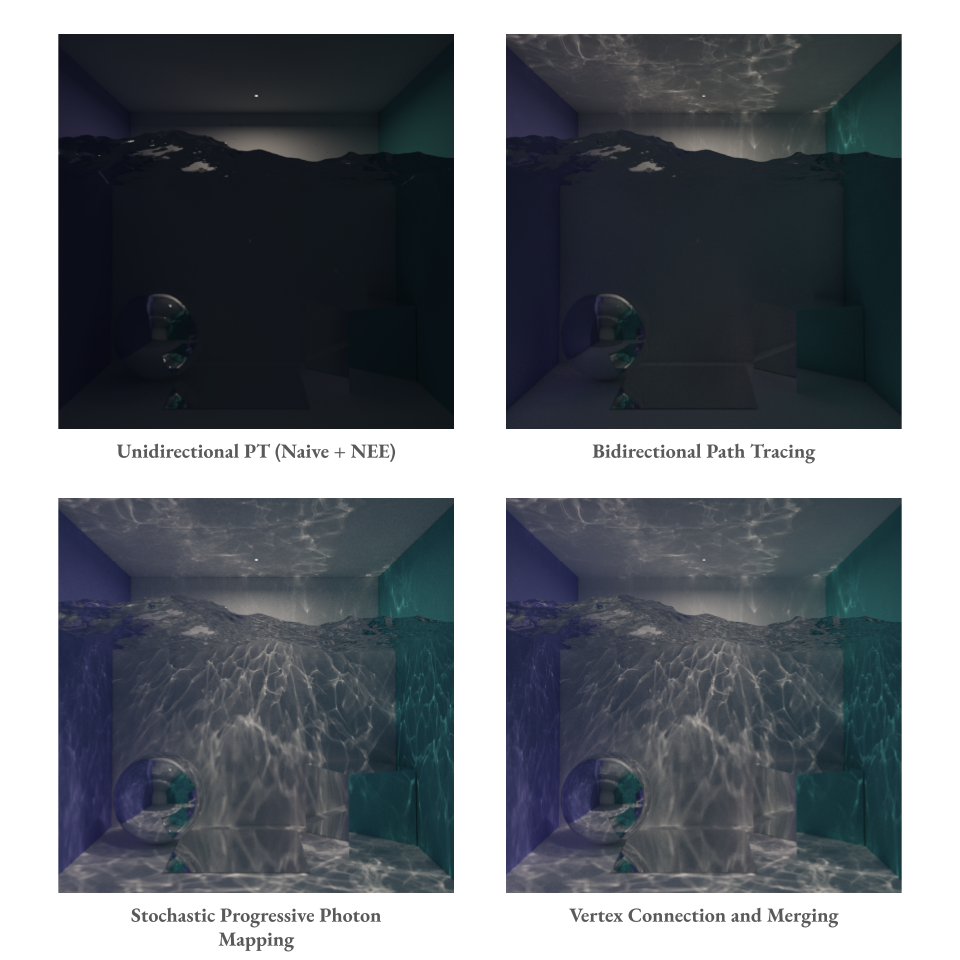 How different GI algorithms handle a scene dominated by SDS caustic paths — read the Guide to learn what that means.
 A VCM render of a physically modeled lightbulb illuminating a very glossy gold ring in a rougher steel bowl, next to a few moderately rough gold coins. There is a thick pane of glass (the walls of the lightbulb) separating the only light in the scene from the rest, making everything in the scene essentially caustic lighting. Note also the glossy interreflection in the bowl, which VCM captures beautifully and efficiently.
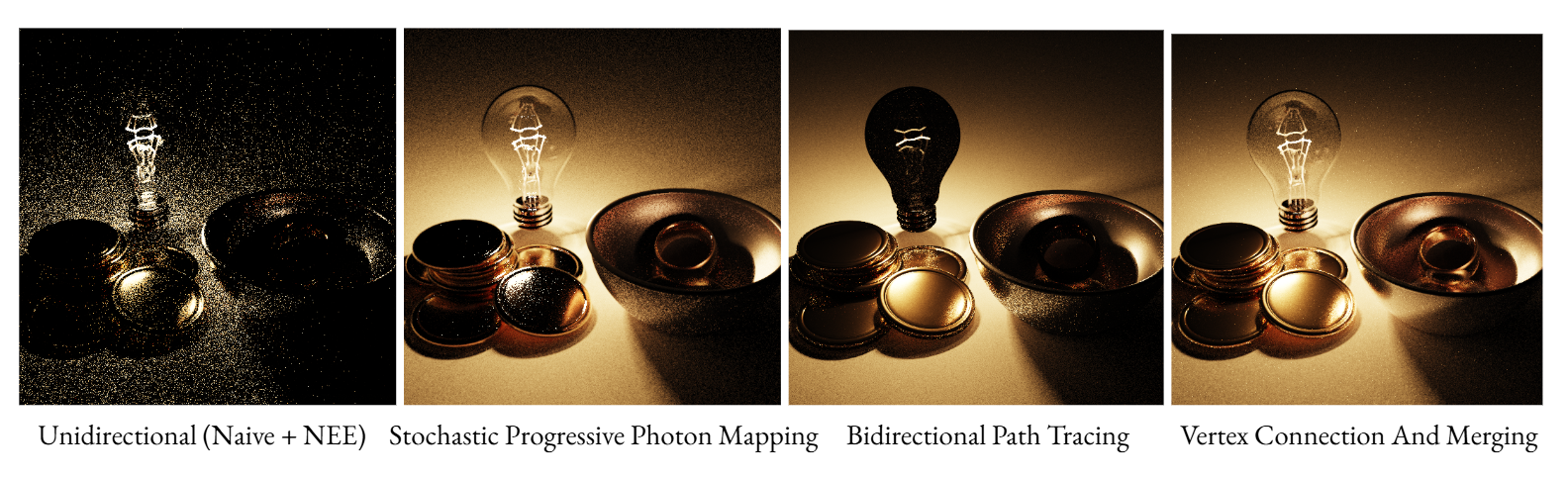 The same scene rendered in 5 minutes using 4 different algorithms. SPPM and BDPT perform better in different areas; only VCM fully captures the glossy interreflections (look for the red color in the bowl).
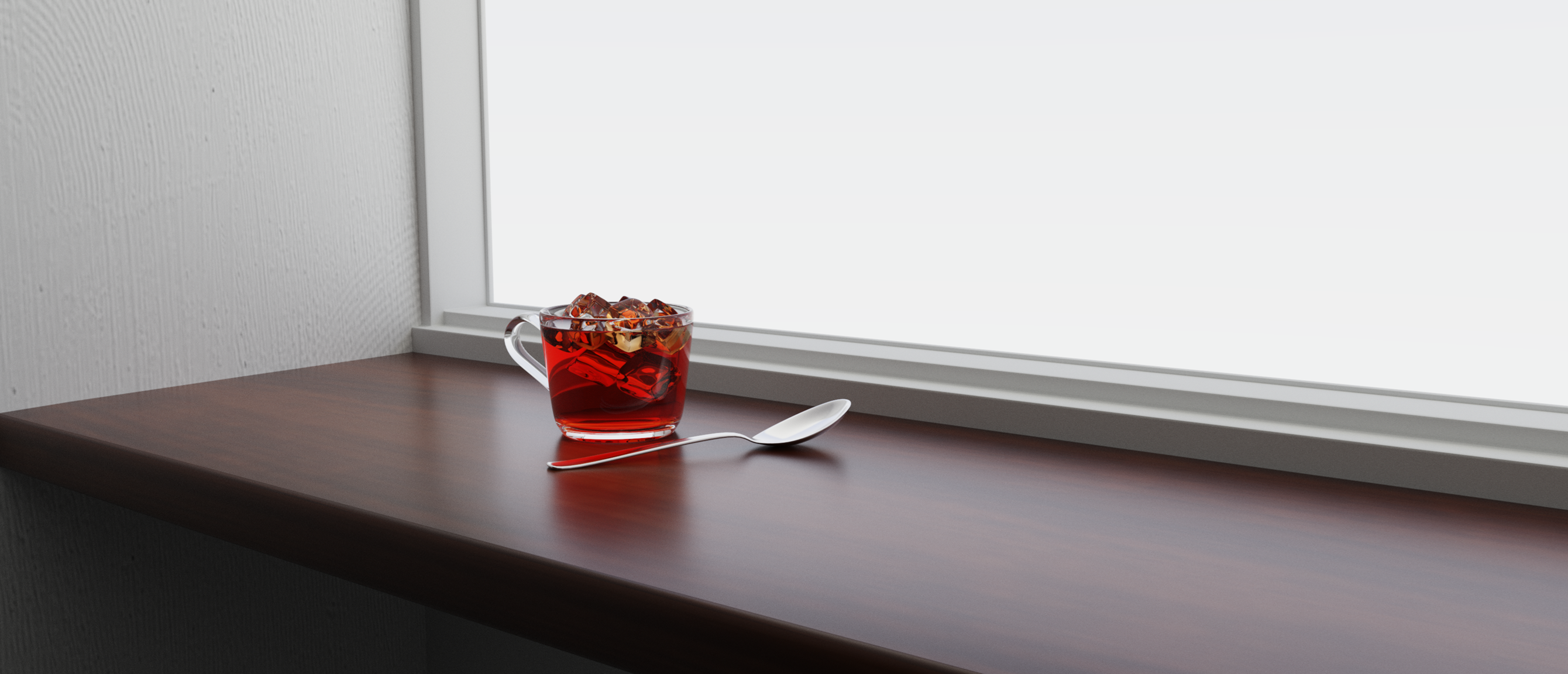 Unidirectional render featuring priority-based nested dielectrics — wood modeled with a layered BSDF (microfacet dielectric over a diffuse textured surface), metal modeled with a microfacet metal.
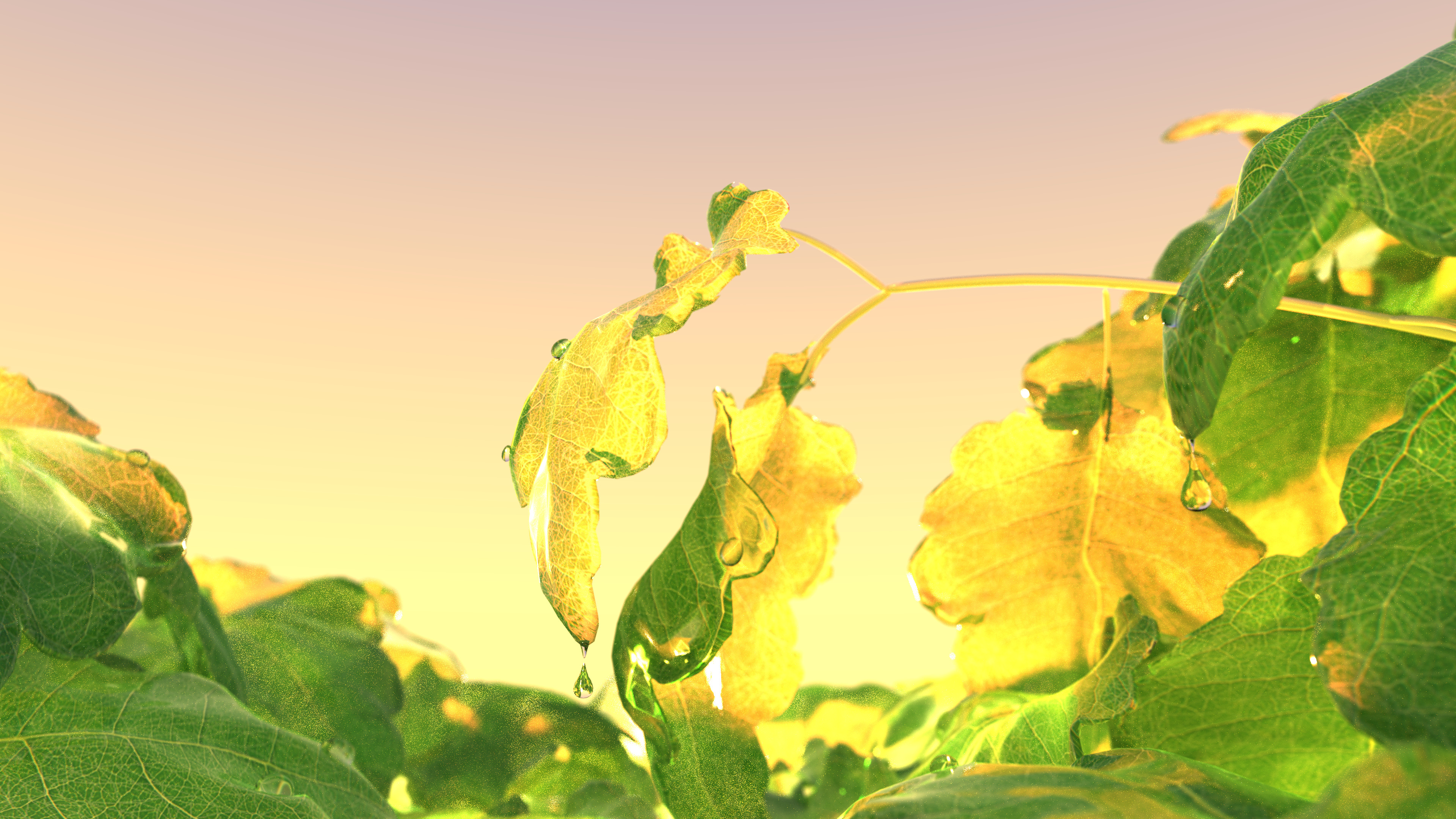 Unidirectional render featuring a custom leaf material — a layered BSDF with a microfacet dielectric over a transmissive diffuse textured surface, with dew drops.
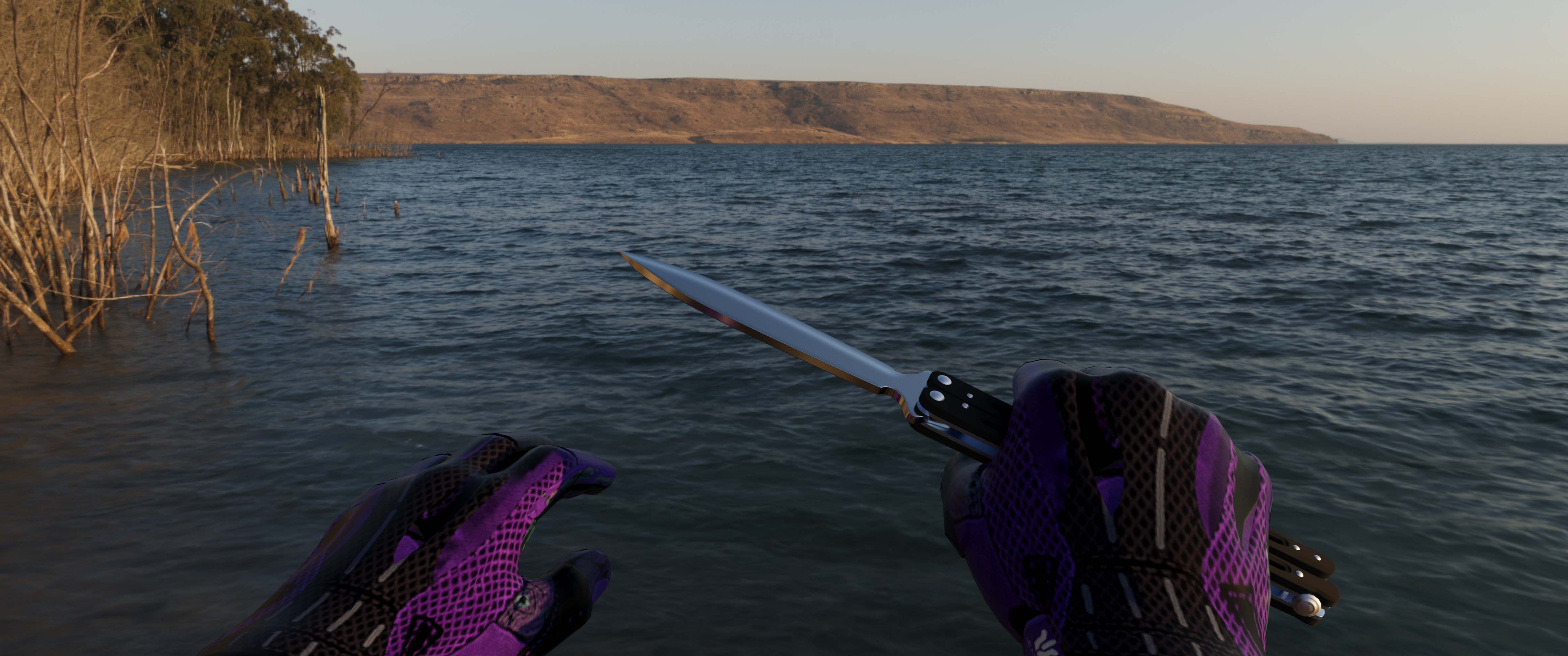 Unidirectional render featuring an importance-sampled HDRI for NEE (via a Walker/Vose alias table).
Learn More 🔗
- Novum Guide to Advanced GI — an extensive, intuition-focused guide to advanced light transport theory: importance sampling, NEE, MIS, BDPT, SPPM, and VCM.
- Novum Documentation — implementation details: architecture, data structures (BVH, spatial hash grid), and GPU data packing.
Writeups 🔗
Long-form technical deep dives on Novum’s algorithms and implementation live below.